

Arsenal legend Gilberto Silva has cast doubt on the notion that set pieces will become the defining attacking weapon at the upcoming World Cup, despite their growing influence in club football.
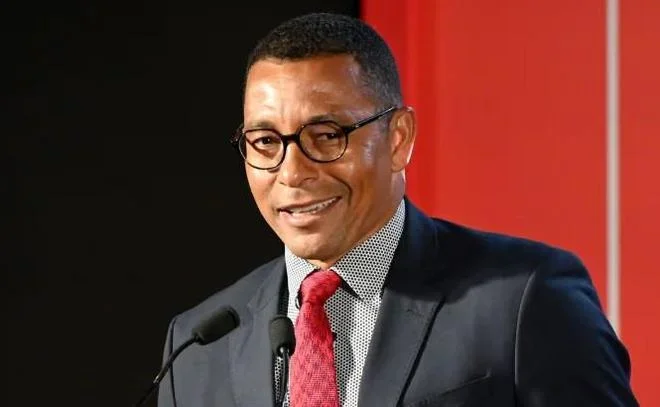
The former Brazil international, who will serve as a member of FIFA’s Technical Study Group (TSG) at the tournament, pointed to the limited time national teams have to drill complex routines as a key reason. While Arsenal have thrived this season thanks to formidable aerial threats from corner kicks and free kicks—boasting defenders like Gabriel Magalhães and William Saliba—Silva believes the World Cup presents a different challenge.
“At Arsenal they have excellent central defenders who are very dangerous from set pieces. But I’m not certain it will be the same in the World Cup,” Silva told the Mirror. “National teams simply don’t have enough time to prepare those detailed tactics.”
Silva, who won the World Cup with Brazil in 2002 and spent many years at Arsenal, acknowledged that set pieces can still be a useful tool. However, he stressed they are unlikely to be the primary method of scoring. “You can use them, but I don’t think they will be the main weapon,” he said. “The matches will be very tight. Many teams will rely on counter-attacks, transitions, and other ways to find the net.”
Meanwhile, FIFA is expected to tighten refereeing on physical contact in the penalty area, particularly during corner kicks where pulling, pushing, and grappling have been common in past tournaments. The TSG—led by FIFA’s head of global football development Arsène Wenger—will analyze tactical trends throughout the competition. For the first time, some of their insights will be shared with fans and teams via a dedicated app, providing real-time updates on evolving tactics.
The group includes a host of former internationals and coaches: Otto Addo (Ghana), Tobin Heath (USA), Jürgen Klinsmann (Germany), Jayne Ludlow (Wales), Michael O’Neill (Northern Ireland), Jon Dahl Tomasson (Denmark), Paulo Wanchope (Costa Rica), Aaron Winter (Netherlands), and Pablo Zabaleta (Argentina). They will be supported by data engineers, football analysts, and performance research experts from Miami, Dallas, and Manchester, working under senior FIFA specialists Pascal Zuberbühler and Tom Gardner.
Silva also highlighted a potential tactical impact from the newly introduced “cooling breaks” at the World Cup. He believes the additional stoppages will give coaches more opportunities to adjust their game plans mid-match. “This will be a great chance for managers. Previously they could only give instructions at halftime. Now they will have two extra communication moments in each game, which could be crucial,” he explained.
