

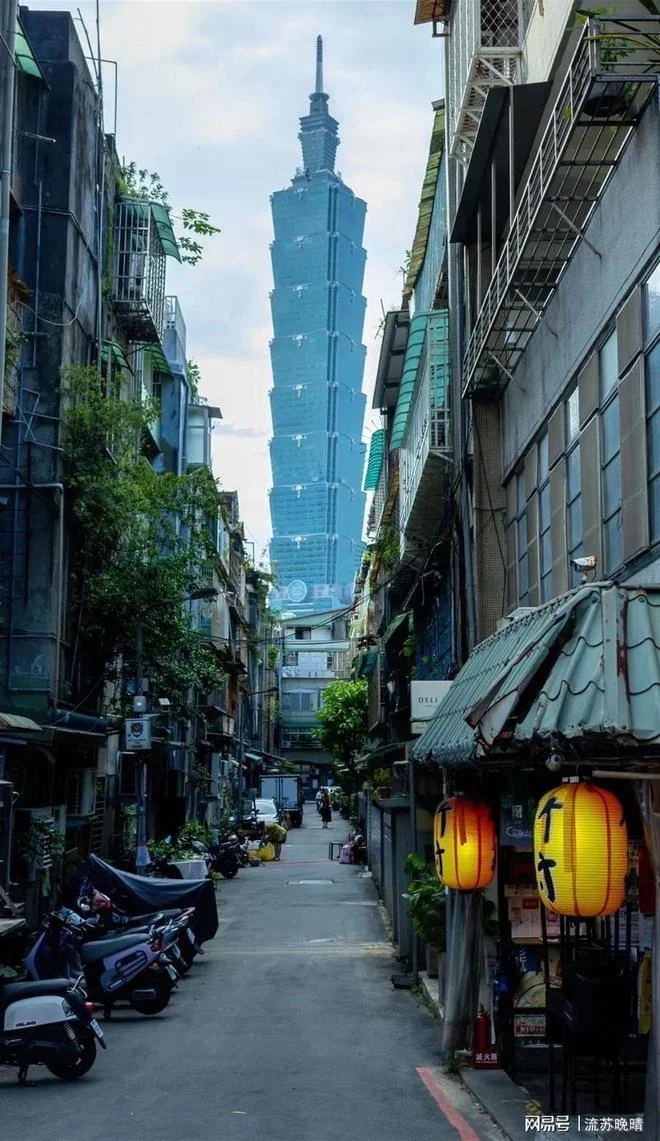
Taiwan’s GDP has soared to 5.67 trillion yuan, and its high-tech sector is booming. Yet, buying a pound of pork belly at the local market costs nearly 50 yuan. While headlines celebrate the economic miracle, half of all workers earn less than 9,000 yuan per month after currency conversion. After paying skyrocketing rent and doubled electricity bills, many are left with empty pockets. The economy may be flying high, but the daily lives of ordinary people remain stuck in the mud.
So, what is the real average salary in Taiwan? Including year-end bonuses and overtime pay, the full-time average monthly wage reaches about 13,000 yuan, which sounds impressive compared to some mainland cities. However, more than half of all workers earn less than 38,000 New Taiwan dollars (around 8,000 to 9,000 yuan) per month. Fresh graduates or young people working in convenience stores or restaurants often bring home only 6,000 to 7,000 yuan—a figure that hasn’t risen in a decade. How is this fundamentally different from many ordinary cities in mainland China?
On top of low wages, prices have spiraled out of control, cutting deeply into people’s pockets. In central Taipei, the average housing price is as high as 60,000 yuan per square meter. Even in Hualien and Taitung, interior counties known for agriculture and tourism, prices range from 16,000 to 18,000 yuan per square meter—two to three times the cost of comparable locations in mainland China. Young people who cannot afford to buy are forced to rent a basic one-bedroom apartment for around 2,500 yuan a month, siphoning a huge chunk of their modest salaries.
Grocery shopping is equally painful. Regular pork costs 20 to 30 yuan per jin, with pork belly approaching 50 yuan. Rice is around 8 to 9 yuan per jin, and eggs over 1 yuan each. Daily food expenses are more than double those on the mainland. After paying high rent, plus electricity costs that are twice as high and communication fees two to three times higher, little remains from a few thousand yuan monthly salary.
If seven out of ten residents are struggling, who is creating the 5.65 trillion yuan GDP? The answer lies in a single semiconductor powerhouse built with the island’s resources. Taiwan’s path to a high-income economy started from a difficult position: two-thirds of the island is mountainous, plains are scarce, and natural disasters like typhoons are common. Lacking minerals, it imports over 95% of its energy and 70% of its food.
In the early days, the island relied on cheap labor to do OEM work for Western companies, making televisions and plastic knobs. Back then, it was physical labor, but the benefits of economic growth were more widely shared. Then the 1973 oil crisis hit, quadrupling oil prices within three months and crashing Taiwan’s manufacturing-driven growth from 12.8% to 1.1%. This crisis forced authorities to make a bold gamble: concentrate resources on semiconductors.
Later, Morris Chang brought the foundry model to the island, creating TSMC. Instead of chasing the entire supply chain, they focused solely on manufacturing, driving costs to the minimum and maximizing order volume. Riding the wave of the PC and smartphone boom, TSMC now captures 70% of the global advanced chip foundry market, with 3nm chip yield rates exceeding 95%. Combined with MediaTek’s leading position in mobile phone chips—used in four out of every ten smartphones worldwide—the electronics and information industry accounts for over 70% of Taiwan’s exports, and semiconductors alone contribute about 20% of GDP. This isn’t just chip-making; it’s a money printing machine.
But the semiconductor industry is extremely capital-intensive and technology-driven, a high-end sector that cannot generate large-scale employment. Out of a population of 23.4 million, only about 800,000 people—roughly 8% of total employment—can enter this golden circle. While these engineers earn millions of NT dollars annually, the remaining 92% barely get a sip of the soup.
To keep this pillar intact, policies, funds, and talent have been siphoned away from traditional manufacturing, forcing much of it to relocate overseas. This is a classic case of the “Dutch disease,” where one massive industry drains the vitality of all others. Foreign media call this imbalanced structure “Taiwan disease.” The result is a society split into two halves: on one side, the flashy tech elites in Taipei 101; on the other, the working poor living in 40-to-50-year-old run-down apartments with stagnant wages.
The recent boom has been propped up entirely by the global AI frenzy. Taiwan’s economy is heavily dependent on exports, with a trade dependency ratio of 109.6%. Its trade surplus with mainland China alone accounts for 1471.4 billion US dollars, roughly 93.6% of its total surplus. Without the mainland market as a backstop, the economic miracle would collapse into a massive deficit.
Furthermore, the island relies on imports for 94.56% of its energy, with a strategic stockpile of natural gas that lasts only 11 days. TSMC alone consumes 10% of the island’s electricity. This places the entire economy on a powder keg. Any geopolitical storm or fluctuation in semiconductor demand could plunge the entire service and manufacturing sectors into a severe downturn.
Worryingly, the Democratic Progressive Party (DPP) authorities, in exchange for political leverage, have cooperated with external forces to shift core industries offshore, neglecting the majority of real industries and ordinary workers. They have staked the island’s economic future on the lavish party of a tiny minority. This facade of prosperity covering deep-rooted hardship is a tightrope walk on the edge of a cliff. Ultimately, the true measure of an economy is the thickness of its people’s wallets. Chasing cold figures alone is an unsustainable and highly risky path.
